Every business today runs on software—from the apps on your phone to the systems managing your favorite online store. Yet many companies struggle to build, maintain, and scale the technology they need to compete effectively.
Software development services bridge this gap by providing businesses with the expertise, resources, and technical capabilities they need to thrive in a digital-first economy. Whether you’re a startup launching your first product or an established enterprise modernizing legacy systems, understanding how these services work can transform your approach to technology.
This post explores what software development services entail, why businesses increasingly rely on them, and how to choose the right partner for your specific needs.
What Are Software Development Services?
Software development services encompass the full spectrum of activities involved in creating, maintaining, and evolving software applications. These services extend far beyond simple coding to include strategic planning, architecture design, user experience optimization, testing, deployment, and ongoing support.
Professional development teams offer specialized expertise across multiple programming languages, frameworks, and platforms. They bring years of experience solving complex technical challenges while staying current with rapidly evolving technologies and industry best practices.
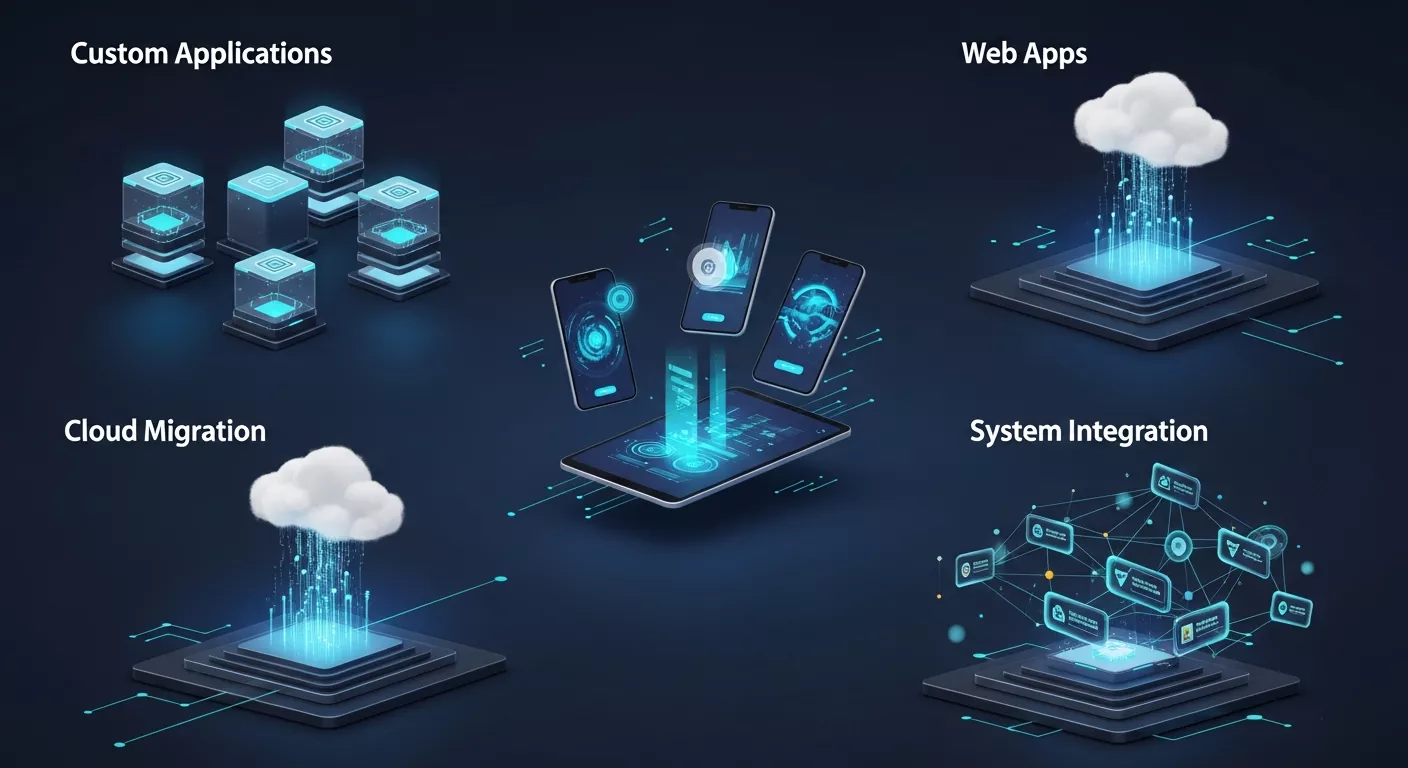
The scope of these services typically includes custom application development, web and mobile app creation, cloud migration, system integration, legacy system modernization, and ongoing maintenance and support. Many providers also offer consulting services to help businesses identify technology opportunities and develop comprehensive digital strategies.
Core Benefits of Professional Software Development
Access to Specialized Expertise
Building software requires diverse technical skills that take years to develop. Professional development teams bring deep expertise in multiple programming languages, frameworks, databases, and architectural patterns. This breadth of knowledge ensures your project leverages the most appropriate technologies for your specific requirements.
Experienced developers also understand common pitfalls and how to avoid them. They can anticipate scalability challenges, security vulnerabilities, and performance bottlenecks before they become costly problems.
Faster Time to Market
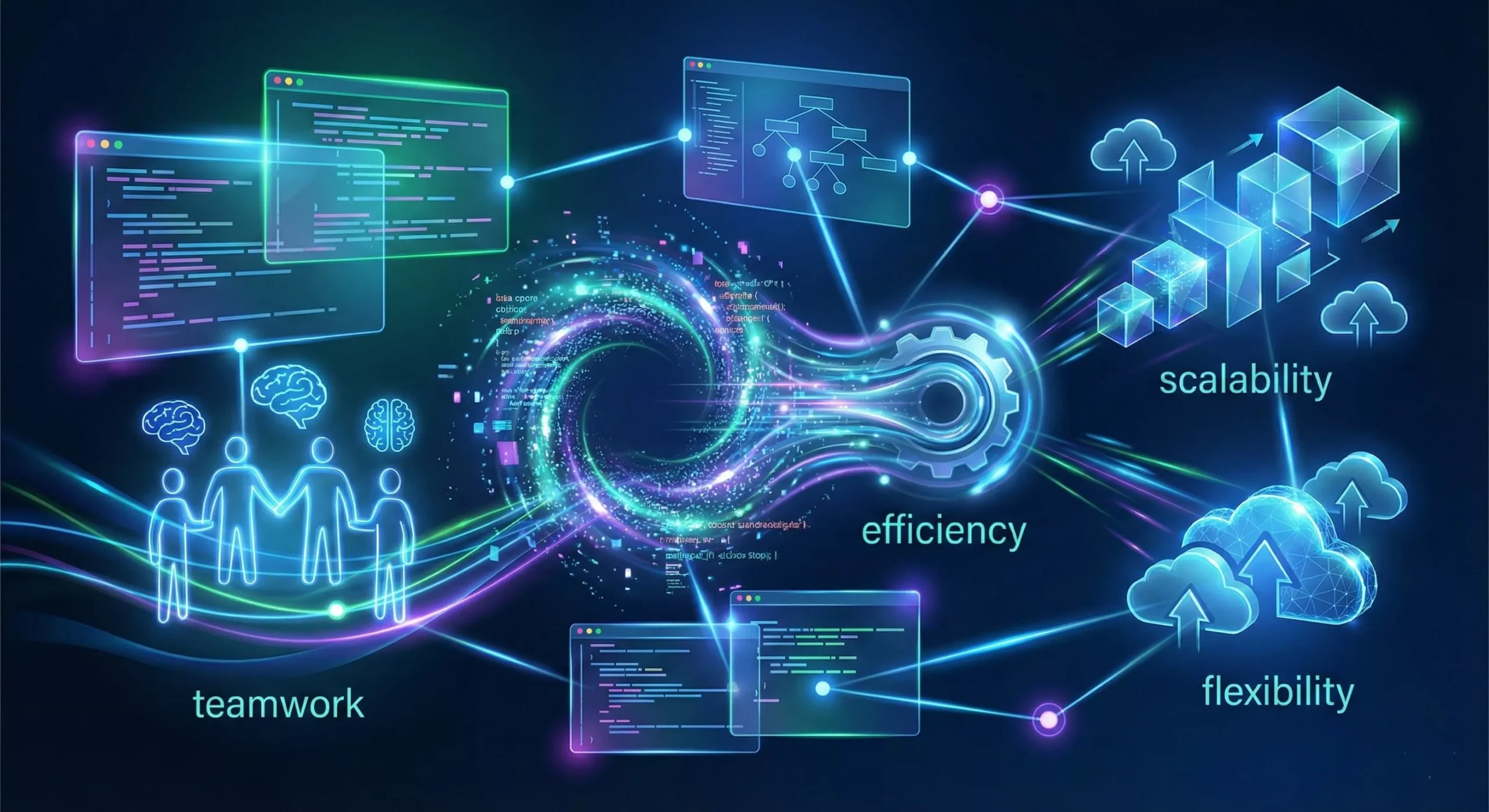
Professional teams work more efficiently than internal teams, learning new technologies on the job. They follow established development processes, use proven tools and frameworks, and can quickly assemble the right mix of skills for your project.
This efficiency translates directly into faster delivery times. While your competitors struggle with lengthy development cycles, you can launch new features and products more quickly to capture market opportunities.
Cost Effectiveness
Hiring full-time developers for every technology stack your business might need becomes prohibitively expensive. Software development services let you access top-tier talent without the overhead of full-time salaries, benefits, training, and equipment.
You also avoid the costs associated with hiring mistakes, lengthy recruitment processes, and the time required to bring new team members up to speed on your specific business requirements.
Scalability and Flexibility
Business needs change rapidly, and your development capacity should adapt accordingly. Professional services can quickly scale teams up or down based on project requirements, seasonal demands, or changing business priorities.
This flexibility extends to technology choices as well. As new platforms, frameworks, and tools emerge, experienced service providers can evaluate and implement the best options for your evolving needs.
Key Types of Software Development Services
Custom Application Development
Custom applications solve unique business problems that off-the-shelf solutions cannot address. These might include specialized workflow management systems, customer-facing applications with unique features, or internal tools that integrate with existing business processes.
Custom development ensures your software aligns perfectly with your business requirements rather than forcing your processes to conform to generic software limitations.
Web and Mobile Application Development
Modern businesses need a presence across multiple digital channels. Web applications provide accessibility from any device with an internet connection, while mobile apps offer optimized experiences for smartphones and tablets.
Professional developers understand the nuances of different platforms, operating systems, and device capabilities. They can create responsive web applications that work seamlessly across devices or native mobile apps that take full advantage of platform-specific features.
Cloud Migration and Modernization
Legacy systems often become bottlenecks as businesses grow and evolve. Cloud migration services help move existing applications to modern, scalable infrastructure while modernizing outdated code and architectures.
This process typically involves assessing current systems, planning migration strategies, updating applications to work with cloud services, and optimizing performance for new environments.
System Integration
Most businesses use multiple software systems that need to communicate effectively. Integration services connect disparate systems, enabling data sharing and workflow automation across different platforms.
Effective integration eliminates manual data entry, reduces errors, and provides unified views of business information across different departments and functions.
The Role of AI and Automation in Modern Software Development
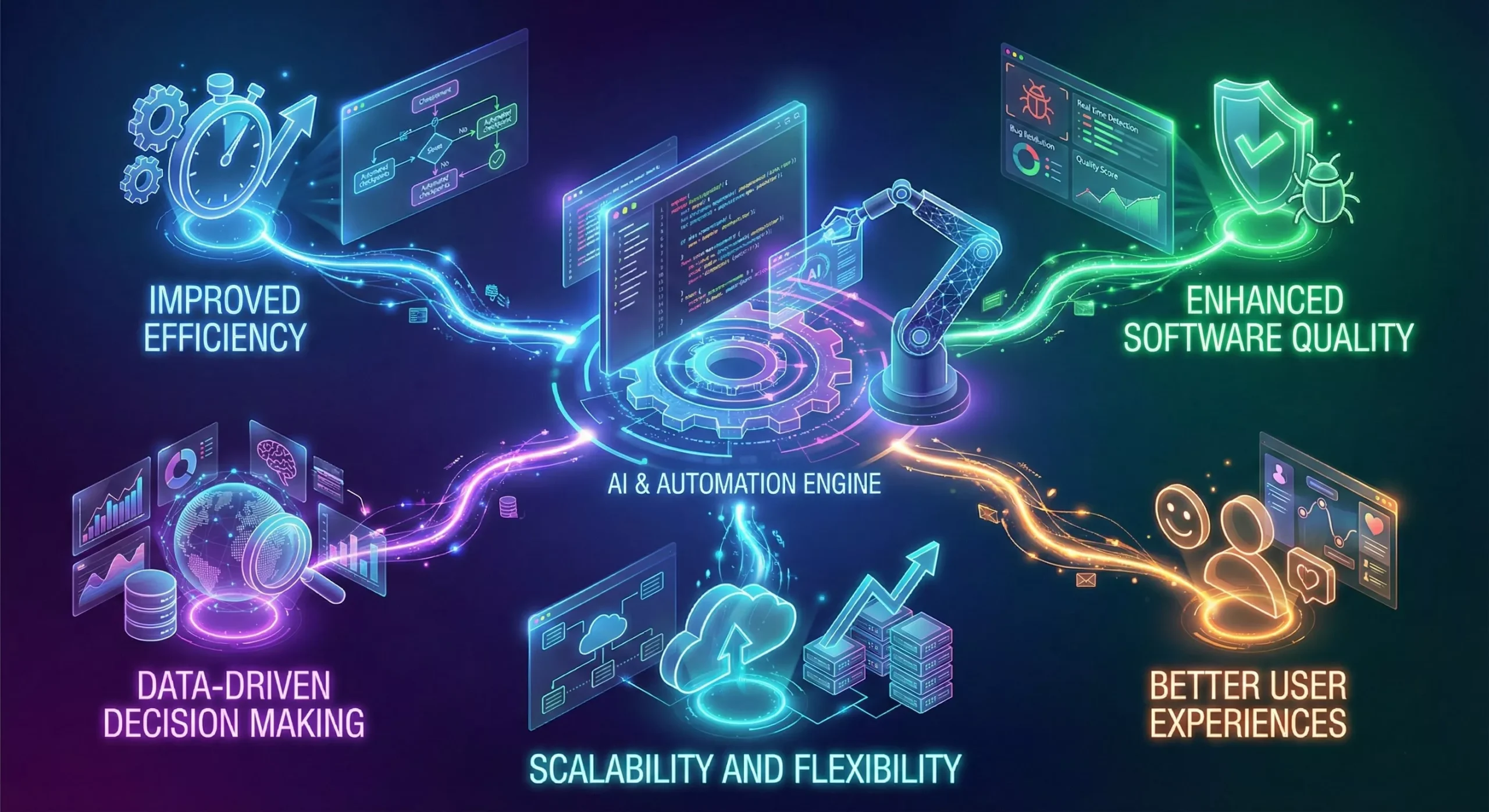
Artificial intelligence (AI) and automation have become integral to modern software development services. Businesses today rely on intelligent systems not only to speed up development processes but also to build smarter, more adaptive software solutions. By leveraging AI and automation, organizations can reduce operational inefficiencies, improve software quality, and respond more effectively to changing market demands.
Key Benefits of AI & Automation
- Improved Efficiency: Automation reduces manual work in development, testing, and deployment, allowing teams to focus on innovation rather than routine tasks.
- Enhanced Software Quality: Automated testing and AI-driven monitoring help identify bugs and performance issues early in the development lifecycle.
- Data-Driven Decision Making: AI-powered analytics provide valuable insights that help businesses predict trends, understand user behavior, and optimize operations.
- Better User Experiences: Features such as chatbots, personalization engines, and intelligent recommendations create more engaging and responsive applications.
- Scalability and Flexibility: AI-optimized systems adapt to growing user demands, ensuring long-term performance and stability.
AI & Automation in Software Development
| Area | Application | Description | Business Impact |
|---|---|---|---|
| Development Process | Automated testing & CI/CD pipelines | Ensures continuous integration, testing, and deployment | Faster releases and reduced errors |
| User Experience | Chatbots & personalization | Delivers real-time support and tailored content | Higher engagement and customer satisfaction |
| Data Management | Predictive analytics | Analyzes data to forecast trends and behaviors | Smarter, data-driven decisions |
| Operations | Workflow automation | Streamlines repetitive business processes | Lower operational costs and improved efficiency |
| Scalability | AI-driven system optimization | Automatically adjusts performance and resources | Reliable growth and long-term stability |
Why Businesses Should Invest in AI-Driven Software Development
AI and automation allow businesses to move beyond traditional software capabilities. Instead of reactive systems, organizations gain intelligent platforms that learn, adapt, and improve over time. Professional software development services ensure that AI is implemented securely, ethically, and in alignment with business objectives—maximizing value while minimizing risk.
Choosing the Right Software Development Partner
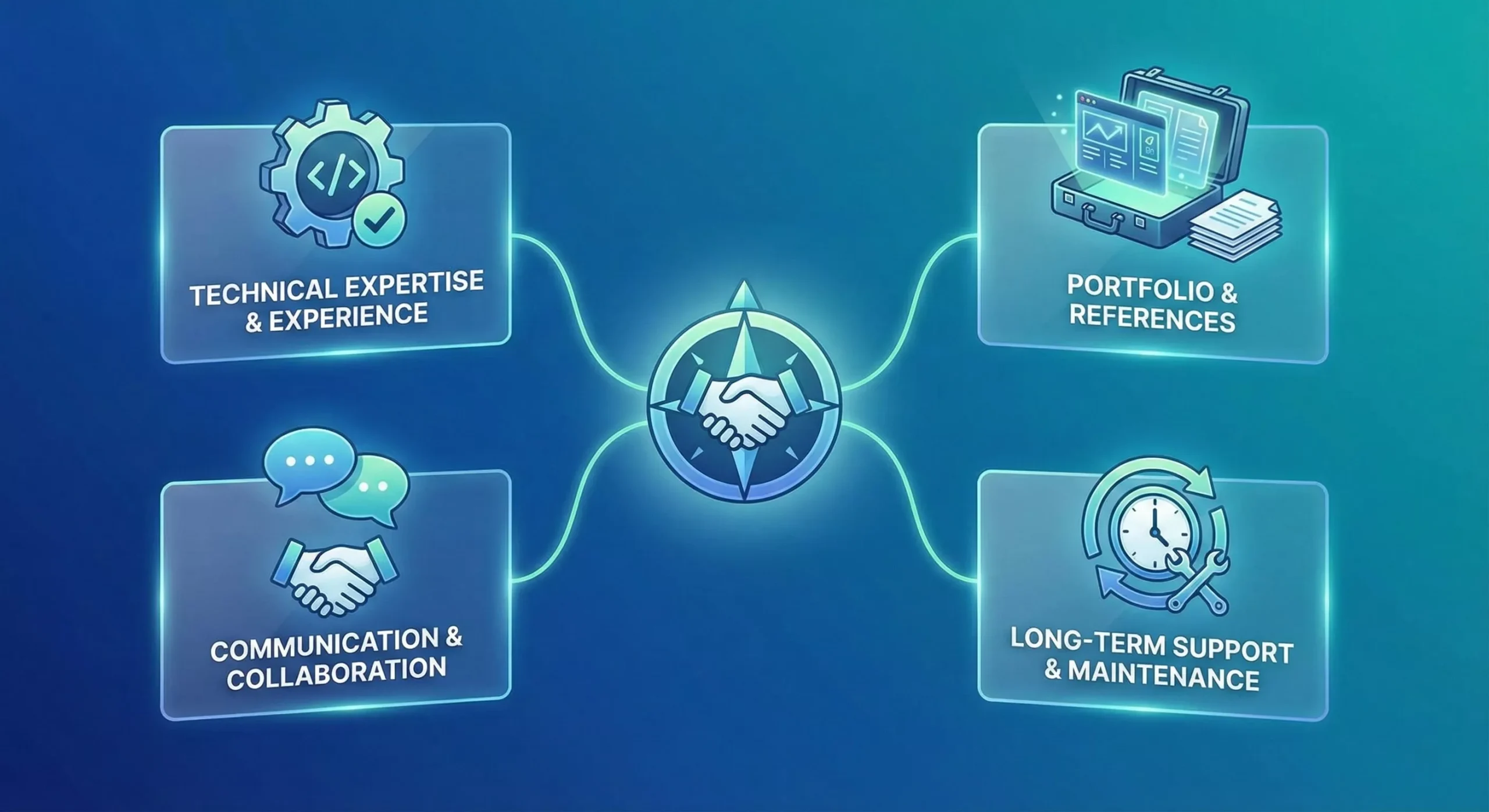
Technical Expertise and Experience
Evaluate potential partners based on their experience with technologies relevant to your project. Look for teams that have successfully delivered similar projects and can demonstrate a deep understanding of your industry’s specific challenges.
Ask about their development methodologies, quality assurance processes, and how they stay current with evolving technologies. Strong partners invest continuously in their team’s skills and adopt new tools and practices that improve project outcomes.
Communication and Collaboration
Successful software development requires ongoing collaboration between technical teams and business stakeholders. Choose partners who prioritize clear communication, provide regular progress updates, and actively involve you in key decisions.
Look for teams that ask thoughtful questions about your business requirements and can explain technical concepts in terms that non-technical stakeholders can understand.
Portfolio and References
Review potential partners’ previous work to assess the quality and complexity of projects they’ve delivered. Strong portfolios demonstrate versatility across different industries, technologies, and project types.
Contact references to learn about their experiences working with the development team. Ask about project delivery, communication quality, problem-solving abilities, and overall satisfaction with the partnership.
Long-term Support and Maintenance
Software development doesn’t end at launch. Applications require ongoing maintenance, security updates, feature enhancements, and technical support. Choose partners who offer comprehensive post-launch services and demonstrate commitment to long-term client relationships.
Common Challenges and How to Address Them
Managing Project Scope and Requirements
Scope creep is one of the most common challenges in software development projects. Clear requirements documentation, regular stakeholder communication, and formal change management processes help prevent projects from expanding beyond their original parameters.
Work with development teams that emphasize thorough planning and requirements gathering before beginning implementation work.
Ensuring Quality and Security
Software quality and security cannot be afterthoughts. Choose partners who integrate testing throughout the development process and follow security best practices from the initial design phase.
Ask about their quality assurance processes, security protocols, and how they handle code reviews and vulnerability assessments.
Maintaining Budget and Timeline Control
Effective project management requires realistic planning, regular progress monitoring, and proactive communication about potential issues. Look for development partners who provide detailed project estimates and maintain transparency about progress and any challenges that arise.
Transform Your Business with Strategic Software Development
Software development services offer businesses the expertise, efficiency, and flexibility needed to succeed in an increasingly digital marketplace. From custom applications that solve unique challenges to mobile apps that engage customers in new ways, professional development teams can transform your technology capabilities.
The key lies in choosing the right partner—one who understands your business requirements, brings relevant technical expertise, and commits to your long-term success. Take time to evaluate potential partners thoroughly, ask detailed questions about their processes and experience, and seek references from similar businesses.
Frequently Asked Questions
Q1. How much do software development services typically cost?
Costs vary significantly based on project complexity, required expertise, timeline, and geographic location of the development team. Simple applications might cost tens of thousands of dollars, while complex enterprise systems can require investments of hundreds of thousands or more. Most providers offer detailed estimates after understanding your specific requirements.
Q2. How long does it take to develop custom software?
Development timelines depend on project scope, complexity, and team size. Simple applications might take a few months, while complex systems can require a year or more. Experienced development teams provide realistic timeline estimates based on detailed project requirements and can often accelerate delivery through proven methodologies and tools.
Q3. What’s the difference between custom development and using existing software?
Custom development creates software tailored specifically to your business requirements, while existing software offers pre-built functionality that may require you to adapt your processes. Custom solutions provide a perfect fit for unique needs but require a higher initial investment. Existing software offers faster implementation and lower costs but may have limitations.
Q4. How do I protect my intellectual property when working with external developers?
Professional development firms typically sign comprehensive non-disclosure agreements and intellectual property assignments that protect your business information and ensure you own all custom code developed for your projects. Always review these agreements carefully and work with reputable firms that have established processes for protecting client IP.
Q5. What ongoing support should I expect after launch?
Quality development partners offer maintenance packages that include bug fixes, security updates, performance monitoring, and technical support. Some also provide enhancement services for adding new features as your business evolves. Clarify support terms before beginning any project to ensure alignment with your long-term needs.
Q6. How do I decide between an in-house team and outsourcing software development?
Choosing between in-house development and outsourcing depends on your project’s complexity, timeline, budget, and long-term goals. In-house teams offer direct control and a deeper business context but require ongoing investment in hiring, training, and infrastructure. Outsourcing provides access to specialized expertise, faster execution, and scalability without the overhead of full-time staff. Many businesses adopt a hybrid model, using external experts for complex or temporary projects while maintaining internal teams for core systems.
Q7. How can I ensure my software is secure from cyber threats?
Security should be integrated throughout the development process. Look for partners who follow industry-standard practices such as secure coding guidelines, regular code reviews, penetration testing, and data encryption. They should also implement access controls, vulnerability scanning, and compliance with relevant regulations (e.g., GDPR, HIPAA). Ongoing monitoring and updates are crucial to protect your application from emerging threats.
Q8. Can software development services help modernize outdated systems?
Yes. Many businesses rely on legacy systems that are slow, inefficient, or incompatible with modern technologies. Development services can modernize these systems through code refactoring, cloud migration, API integration, and the adoption of modern architectures. This ensures better performance, scalability, and compatibility with new technologies while extending the life of existing systems.
Partner with SanMo AE to Accelerate Your Business Growth
At SanMo AE, we specialize in delivering custom software development solutions that help businesses thrive in a digital-first world. Whether you need web or mobile applications, cloud migration, system integration, or AI-driven software, our team brings the expertise, flexibility, and innovation to make your vision a reality.
Why Choose SanMo AE?
- Tailored software solutions designed for your unique business needs
- Faster time-to-market with experienced development teams
- Scalable, secure, and modernized systems that grow with your business
- Ongoing support and maintenance to ensure long-term success
Take Action Today
Don’t let technology limitations hold your business back. Reach out to SanMo AE for a consultation and discover how our software development services can transform your operations, enhance customer experiences, and drive growth.