
Content optimization has evolved far beyond stuffing keywords into paragraphs and hoping for the best. Modern search engines reward content that genuinely serves users while demonstrating expertise and authority. This comprehensive guide explores sophisticated techniques that separate high-performing content from the competition.
Understanding advanced content optimization means recognizing that search engines now evaluate context, user intent, and content quality with unprecedented sophistication. The strategies that worked five years ago may actually harm your rankings today. Success requires a nuanced approach that balances technical precision with authentic value creation.
This post will equip you with cutting-edge optimization techniques used by top-performing websites. You’ll learn how to leverage semantic search principles, optimize for featured snippets, and create content that satisfies both algorithms and human readers.
Understanding Semantic Search and Topic Clusters
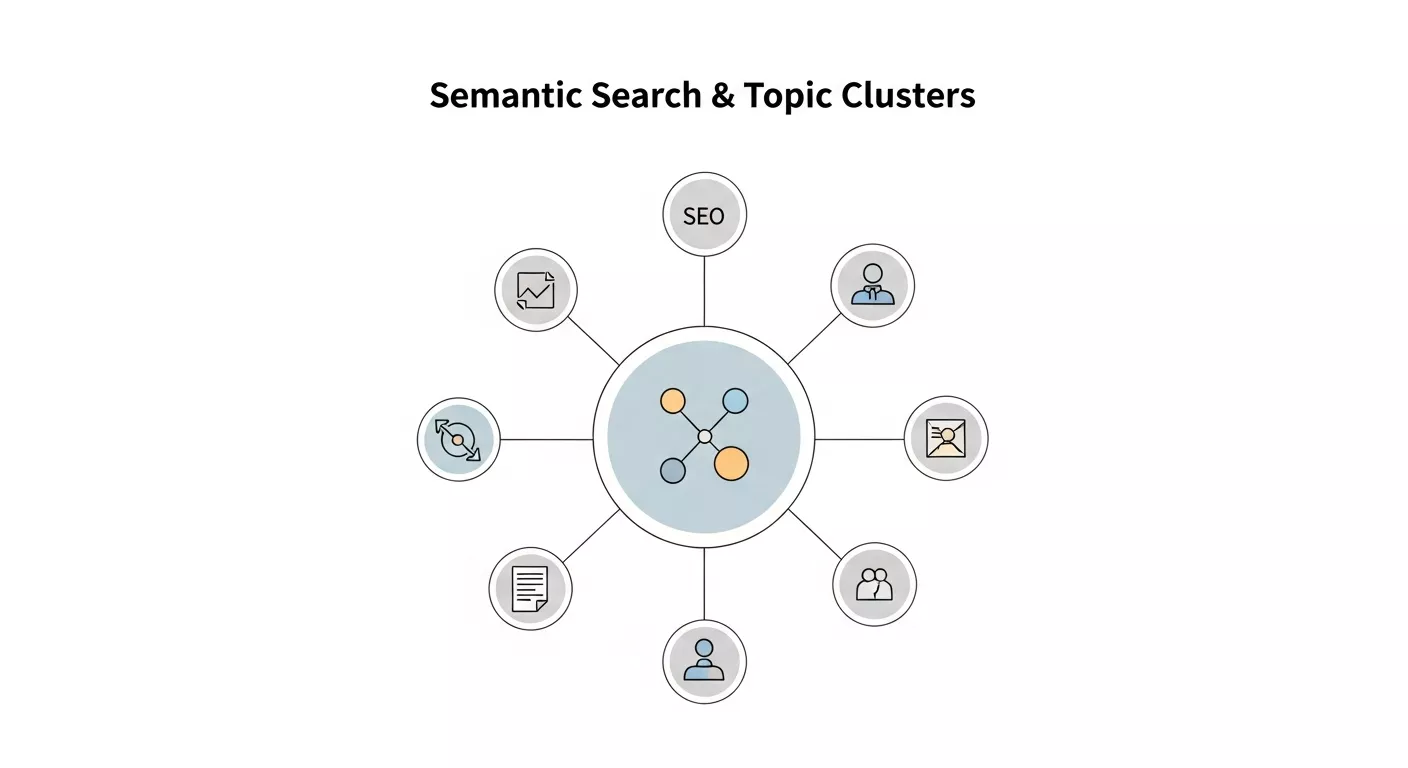
Modern search engines don’t just match keywords—they understand relationships between concepts. Semantic search technology analyzes the meaning behind queries and content, making topical authority more important than ever.
Building Topic Authority Through Content Clusters
Advanced content optimization starts with creating comprehensive topic clusters rather than standalone articles. This approach involves developing a pillar page that covers a broad topic extensively, then creating cluster content that explores specific subtopics in detail.
Each cluster page should link back to the pillar page and interconnect with related cluster content. This internal linking structure signals to search engines that you’ve created comprehensive coverage of a topic, boosting your authority for related queries.
Leveraging Latent Semantic Indexing (LSI) Keywords
LSI keywords are conceptually related terms that search engines use to understand content context. Rather than focusing solely on your primary keyword, identify related terms that naturally occur when discussing your topic.
Use tools like Google’s “People Also Ask” section and related searches to discover LSI opportunities. Incorporate these terms naturally throughout your content, particularly in subheadings and body paragraphs where they add genuine value to the discussion.
Optimizing for Search Intent and User Journey
Advanced content optimization requires understanding the different types of search intent and crafting content that satisfies specific user needs at various stages of their journey.
Identifying and Matching Search Intent
Search intent falls into four primary categories: informational, navigational, transactional, and commercial investigation. Analyze top-ranking pages for your target keywords to understand what type of content search engines prefer for specific queries.
Informational content should provide comprehensive answers and educational value. Transactional content needs clear calls-to-action and conversion pathways. Commercial investigation content requires detailed comparisons and evaluation criteria.
Creating Content for Different Funnel Stages
Map your content to specific stages of the buyer’s journey. Top-of-funnel content should address broad problems and provide educational value. Middle-funnel content can explore solutions and build trust through expertise demonstration. Bottom-funnel content should facilitate decision-making and conversion.
This strategic approach ensures your content serves users effectively while building a comprehensive content ecosystem that supports business objectives.
Technical Optimization for Enhanced Performance
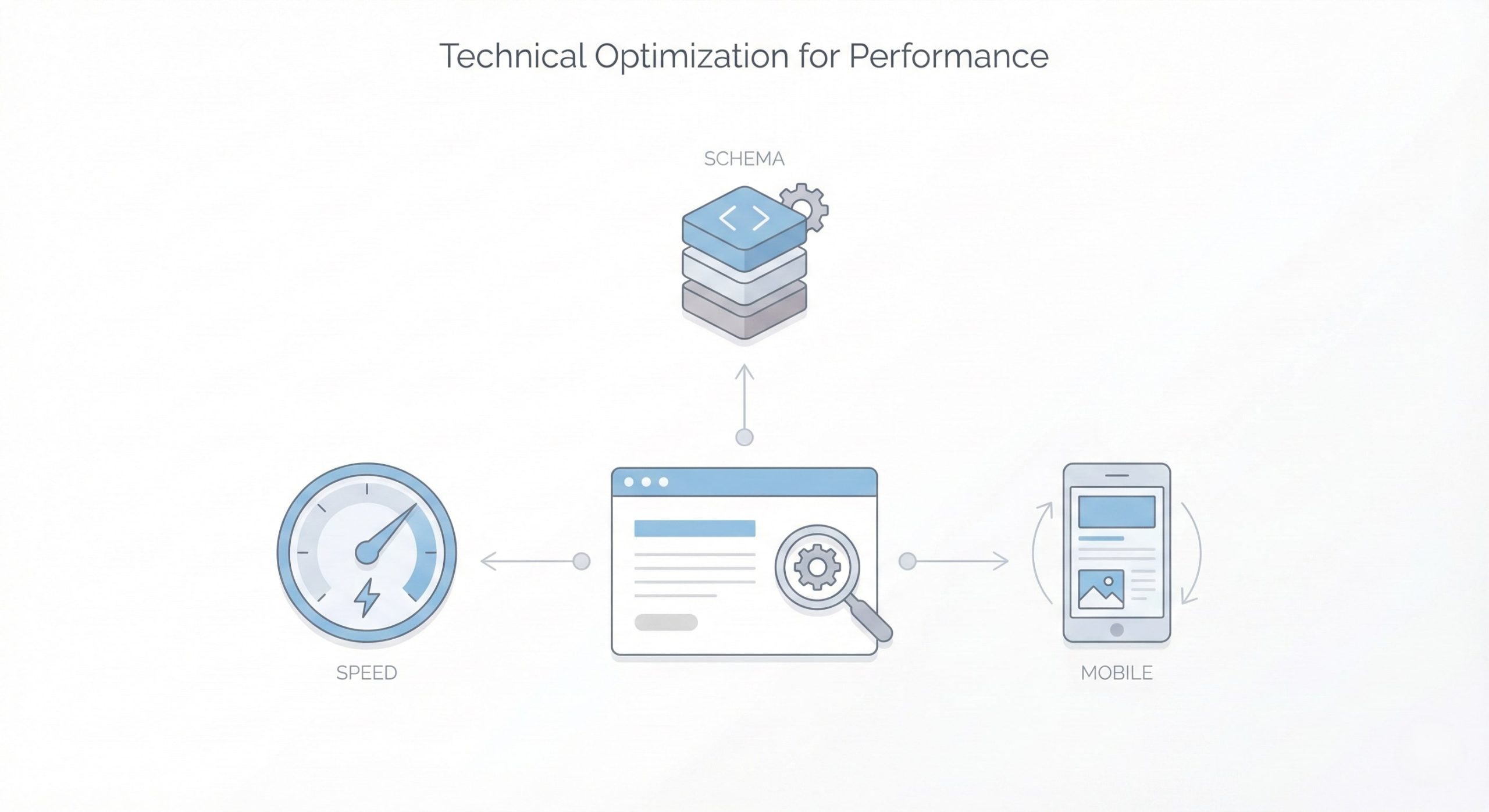
Technical elements play a crucial role in advanced content optimization. These behind-the-scenes factors significantly impact how search engines crawl, index, and rank your content.
Structured Data Implementation
Structured data markup helps search engines understand your content context and display rich snippets in search results. Implement relevant schema markup for articles, reviews, FAQs, and other content types.
Focus on schema types that align with your content goals. Article schema can enhance news and blog content, while FAQ schema might earn featured snippet positions for comprehensive guides.
Page Speed and Core Web Vitals
Content optimization extends beyond words to include technical performance. Search engines increasingly prioritize user experience metrics like loading speed, interactivity, and visual stability.
Optimize images through compression and proper formatting. Minimize JavaScript and CSS files. Use content delivery networks to reduce server response times. These technical improvements directly impact both user satisfaction and search rankings.
Mobile-First Optimization
With mobile-first indexing, search engines primarily use the mobile version of your content for ranking decisions. Ensure your content displays properly on mobile devices and maintains readability across screen sizes.
Consider how your content structure adapts to smaller screens. Long paragraphs may need breaking up for mobile readability, and calls-to-action should remain easily accessible on touch interfaces.
Content Experience (CX): Optimizing Beyond Search Rankings
Advanced content optimization is no longer just about being found—it’s about how users experience your content once they arrive. Content Experience (CX) focuses on readability, interaction, and engagement, ensuring users can easily consume, understand, and act on your content.
Search engines increasingly measure user satisfaction signals, making CX a critical factor in long-term SEO success.
What Is Content Experience (CX)?
Content Experience refers to how users interact with your content across layout, structure, readability, and engagement elements. Even highly optimized content can fail if users struggle to navigate or understand it.
Strong CX aligns content presentation with user behavior and expectations, particularly on mobile and touch-based devices.
Key Elements of an Optimized Content Experience
An effective content experience combines strategic design with content clarity.
Core CX elements include:
- Clear headings and logical content hierarchy
- Short paragraphs for improved readability
- Visual breaks such as lists, tables, and white space
- Scannable layouts optimized for mobile users
- Prominent yet non-intrusive calls-to-action
Engagement Signals That Influence SEO Performance
Search engines use engagement signals to evaluate content quality and relevance. Poor CX often leads to low engagement, regardless of content depth.
Key engagement metrics influenced by CX:
- Time on page
- Scroll depth
- Bounce rate
- Interaction with internal links
- Conversion actions
Improving CX directly supports these metrics and strengthens SEO performance.
Good vs Poor Content Experience: A Comparison
The table below highlights how CX optimization impacts both user behavior and search visibility.
| CX Factor | Optimized Content Experience | Poor Content Experience |
|---|---|---|
| Content layout | Clear structure and spacing | Dense, overwhelming text |
| Readability | Short sentences and paragraphs | Long, complex blocks |
| Navigation | Logical internal linking | Disconnected or missing links |
| Mobile usability | Fully responsive design | Hard-to-read mobile layout |
| User engagement | High scroll depth and interaction | Quick exits and low dwell time |
Why Content Experience Drives Long-Term Results
A strong content experience keeps users engaged, encourages deeper exploration, and builds trust with your brand. Over time, this leads to higher conversion rates, stronger topical authority, and improved search performance.
By treating content as an experience—not just information—you align optimization efforts with how modern users and search engines evaluate quality.
Content Depth and Comprehensive Coverage
Advanced content optimization prioritizes comprehensive topic coverage over surface-level treatment. Search engines reward content that thoroughly addresses user questions and provides genuine expertise.
Developing Content Depth
Create content that goes beyond basic information to provide unique insights, analysis, and actionable advice. Include multiple perspectives on complex topics and address potential objections or concerns readers might have.
Use data, case studies, and expert opinions to support your points. Original research and unique insights can differentiate your content from competitors and establish thought leadership.
Addressing User Questions Comprehensively
Analyze “People Also Ask” boxes and forums like Quora or Reddit to identify questions your audience asks about your topic. Create content sections that directly answer these questions with specific, actionable information.
This approach not only improves user satisfaction but also increases your chances of appearing in featured snippets and voice search results.
Advanced Link Building and Internal Linking
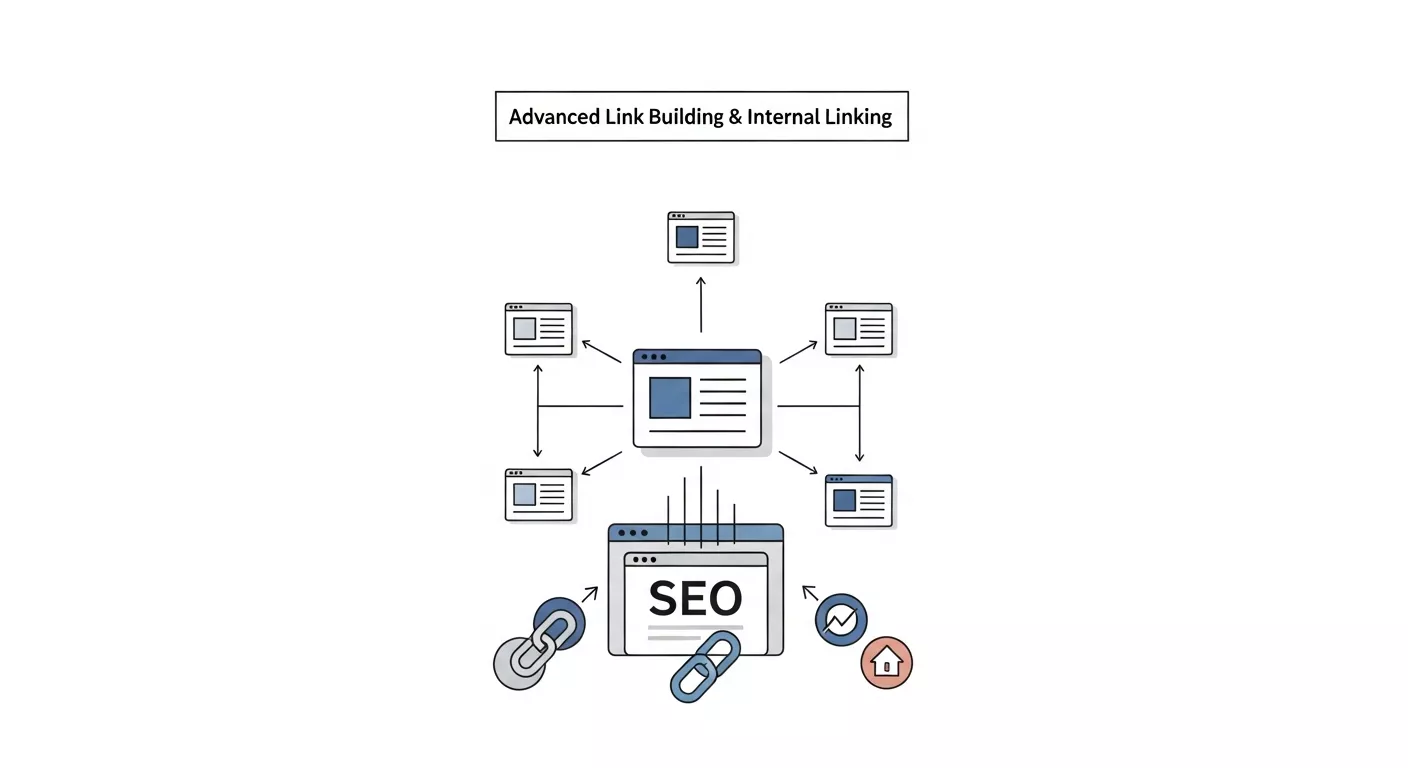
Link optimization remains a critical component of advanced content strategy. Both internal and external linking require strategic planning to maximize their SEO impact.
Strategic Internal Linking
Create logical pathways between related content pieces using descriptive anchor text. Internal links should guide users to additional valuable information while distributing page authority throughout your site.
Develop topic-based linking strategies that connect related articles and guide users deeper into your content ecosystem. This approach increases dwell time and signals topical authority to search engines.
Content-Driven Link Earning
Focus on creating linkable assets that naturally attract external links. Original research, comprehensive guides, and unique tools or resources tend to earn links organically from other websites.
Consider what type of content your industry references and shares. Industry reports, surveys, and expert roundups often generate significant link equity when executed well.
Common Content Optimization Mistakes to Avoid
Even well-researched content can underperform if advanced optimization principles are applied incorrectly. Many websites fail to see results not because of poor content quality, but due to strategic and technical missteps that limit visibility and engagement.
Understanding these common mistakes allows you to protect your rankings, improve user experience, and ensure your optimization efforts deliver long-term value rather than short-lived gains.
Over-Optimization and Keyword Misuse
One of the most frequent mistakes in advanced content optimization is over-optimizing for keywords. Search engines are sophisticated enough to recognize unnatural keyword patterns, which can negatively impact rankings and readability.
Common issues include:
- Repeating primary keywords excessively
- Forcing keywords into headings where they don’t fit naturally
- Ignoring semantic variations and related concepts
- Writing for algorithms instead of real users
A balanced approach that prioritizes clarity, relevance, and user intent always performs better.
Ignoring Content Refresh and Maintenance
Publishing content is not the final step. Search engines favor up-to-date, accurate, and continuously improved content. Outdated statistics, broken links, or irrelevant examples can erode trust and reduce rankings.
Content maintenance should include:
- Updating data and references regularly
- Expanding sections based on new user queries
- Improving internal links as your content library grows
- Re-optimizing for emerging search trends
Poor Internal Linking Strategy
Internal linking is often underutilized or implemented randomly. Without a clear strategy, valuable pages may remain isolated and fail to pass authority across your site.
Effective internal linking should:
- Connect related content within topic clusters
- Use descriptive, context-rich anchor text
- Guide users logically through the content journey
- Support both user navigation and search engine crawling
Advanced Optimization: Best Practices vs Common Mistakes
The table below highlights the difference between effective advanced content optimization and common pitfalls that limit performance.
| Best Practice | Common Mistake | Impact on SEO Performance |
|---|---|---|
| Writing content based on user intent | Focusing only on keywords | Lower engagement and higher bounce rates |
| Building topic clusters | Publishing isolated articles | Weak topical authority |
| Using semantic keywords naturally | Keyword stuffing | Ranking drops and poor readability |
| Updating and refreshing content | Leaving content outdated | Declining rankings over time |
| Strategic internal linking | Random or missing links | Reduced crawl efficiency |
| Optimizing for mobile and UX | Desktop-only optimization | Poor mobile rankings |
Why Avoiding These Mistakes Matters
Avoiding these errors helps ensure your content remains competitive in increasingly crowded search results. Advanced content optimization is not about shortcuts—it’s about building a sustainable framework that aligns content quality, technical performance, and user experience.
By combining strong strategy, continuous refinement, and data-driven decisions, you create content assets that grow in value over time rather than fading after initial publication.
Measuring and Iterating on Content Performance
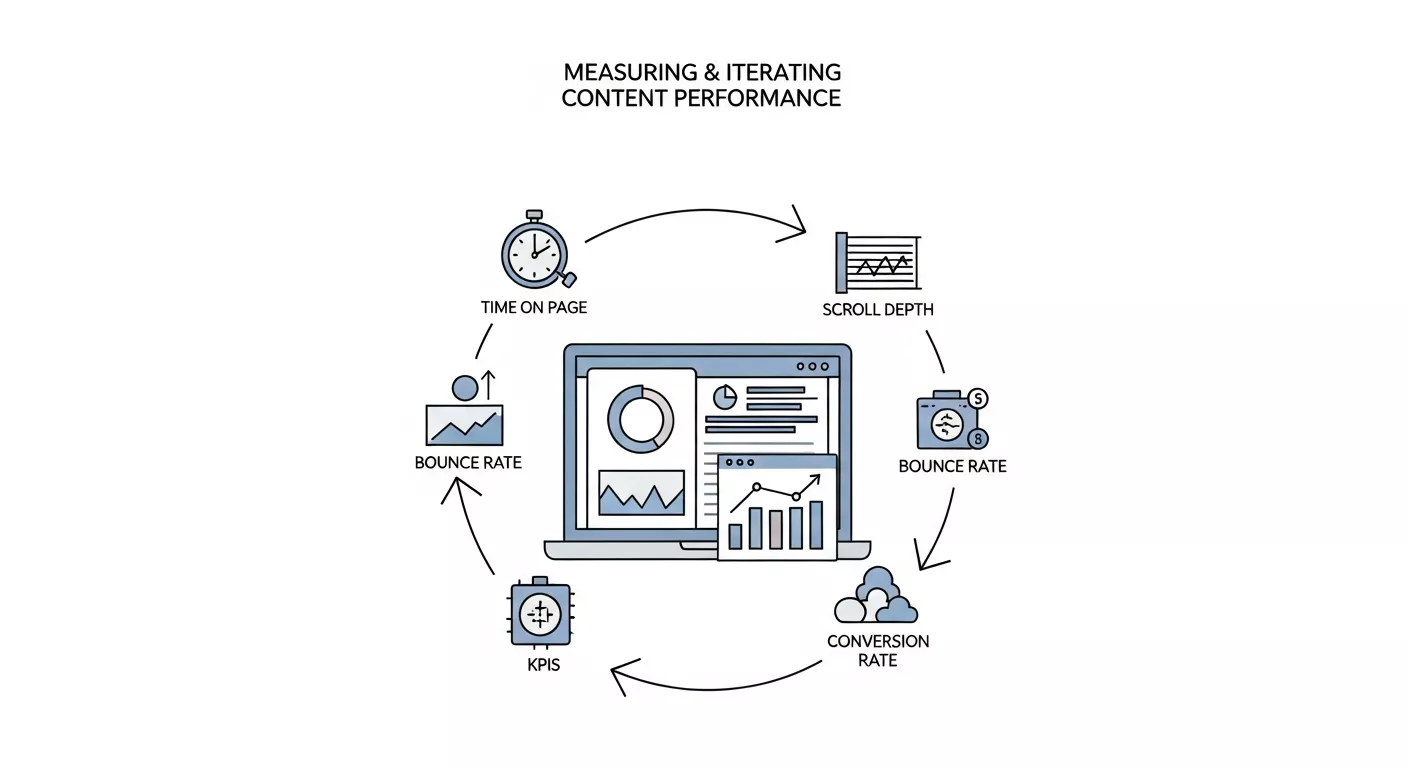
Advanced content optimization requires ongoing measurement and refinement based on performance data and user feedback.
Key Performance Indicators
Track metrics beyond basic traffic numbers to understand content effectiveness. Monitor average time on page, bounce rate, scroll depth, and conversion rates to gauge user engagement quality.
Use tools like Google Search Console to identify which queries drive traffic to your content and optimize for additional related terms that show opportunity.
Continuous Content Improvement
Regularly update and expand existing content based on performance data and industry developments. Add new sections, update statistics, and incorporate fresh insights to maintain content relevance and authority.
Monitor competitor content to identify gaps in your coverage and opportunities for improvement. Advanced content optimization is an ongoing process rather than a one-time effort.
Leveraging AI and Automation Tools
Modern content optimization benefits from AI-powered tools that can identify opportunities and streamline optimization processes.
Content Analysis and Optimization Tools
Use AI-powered platforms to analyze top-ranking content for your target keywords and identify optimization opportunities. These tools can suggest related topics, optimal content length, and readability improvements.
Implement tools that analyze user behavior on your content and provide insights for improvement. Heat mapping and user session recordings can reveal how people actually interact with your content.
Automation for Scale
Develop workflows that allow you to optimize content efficiently across large content libraries. Automated tools can help with technical SEO checks, broken link identification, and content performance monitoring.
Maximizing Your Content’s Potential
Advanced content optimization represents a strategic approach to creating content that serves both search engines and human users effectively. The techniques outlined in this guide require investment in planning, execution, and ongoing refinement, but they deliver sustainable competitive advantages.
Success with advanced content optimization comes from understanding that modern SEO is fundamentally about creating genuinely valuable content experiences. Focus on serving your audience’s needs comprehensively while implementing technical best practices that help search engines understand and reward your efforts.
Start implementing these advanced techniques gradually, measuring their impact on your content performance. Remember that optimization is an ongoing process that evolves with search engine algorithms and user expectations. The websites that commit to continuous improvement and user-focused content creation will achieve the best long-term results.
Frequently Asked Questions (FAQs)
Q1. What is advanced content optimization?
Advanced content optimization goes beyond basic keyword usage. It focuses on semantic search, user intent, content depth, technical performance, and topical authority to create content that satisfies both search engines and human readers.
Q2. How is advanced content optimization different from traditional SEO?
Traditional SEO primarily targets keywords and backlinks, while advanced content optimization emphasizes context, topical relevance, internal linking, structured data, and user experience signals for long-term ranking stability.
Q3. What are topic clusters, and why are they important?
Topic clusters consist of a pillar page supported by multiple interlinked subtopic pages. This structure helps search engines understand topical authority and improves visibility across a broader range of related search queries.
Q4. Do LSI keywords still matter in modern SEO?
Rather than focusing on literal LSI keywords, modern SEO values semantically related terms. These related phrases help search engines better understand content context and relevance.
Q5. How do I optimize content for search intent?
Analyze top-ranking pages to identify whether the intent is informational, transactional, or commercial. Then structure your content to match that intent using appropriate depth, format, and calls-to-action.
Q6. Can existing content be optimized, or is new content required?
Both approaches work, but optimizing existing content often delivers faster results. Updating structure, expanding sections, improving internal links, and refreshing data can significantly improve performance.
Q7. How does technical SEO impact content optimization?
Technical factors such as page speed, mobile usability, structured data, and Core Web Vitals affect how search engines crawl, index, and rank content—even when the content quality is high.
Q8. What role does structured data play in content optimization?
Structured data helps search engines interpret your content more accurately and can enable rich results like FAQs, featured snippets, and enhanced SERP listings.
Q9. How long does it take to see results from advanced content optimization?
Results typically appear within 8–12 weeks, depending on competition, website authority, and execution quality. Long-term improvements continue with consistent optimization.
Q10. Should AI tools be used for content optimization?
AI tools can support research, content analysis, and performance tracking, but human expertise is essential for strategy, accuracy, and value-driven content creation.
Q11. How do I measure the success of optimized content?
Success is measured through organic traffic growth, keyword visibility, engagement metrics, conversion rates, and assisted conversions—not traffic alone.
Q12. Can SanMo AE help with advanced content optimization?
Yes. SanMo AE delivers advanced, data-driven content optimization strategies that improve search visibility, user engagement, and measurable business growth.
Ready to Turn Advanced Optimization Into Measurable Growth?
Understanding advanced content optimization is one thing—executing it effectively and consistently is where real results are made.
At SanMo AE, we help brands move beyond basic SEO tactics and implement data-driven, future-proof content strategies that build topical authority, attract high-intent traffic, and convert readers into customers.
Whether you’re looking to:
- Build powerful topic clusters that dominate search results
- Optimize existing content for semantic search and featured snippets
- Improve Core Web Vitals and technical performance
- Create content that aligns perfectly with user intent and business goals
Our team combines strategic insight, technical expertise, and performance-focused execution to deliver sustainable SEO growth.
Let’s Optimize Smarter, Not Harder
Get a personalized content optimization strategy tailored to your industry, audience, and objectives.
Contact SanMo AE today to elevate your content, strengthen your search presence, and unlock your website’s full potential.