You wouldn’t run digital ads without the help of professional media buying services any more than you would try to find your way through a foreign city without your GPS. You’ll probably get there eventually, but you’ll have squandered time and money and made yourself less safe in the process.
The phrase “media buying” used to mean buying ads; now this term is loaded with an algorithm-powered, strategy-drenched meaning involving a little data wizardry, a whole lot of wheeling and dealing, and just enough creative elbow grease. For businesses targeting businesses looking to optimize their advertising ROI, it might be the difference between campaigns that drain budgets and ones that drive real growth. This article is a comprehensive guide about advertising and media buying services, including complete information about: what media buying is, how it works, who provides it, and when you should include it in your marketing mix.
What Are Media Buying Services?
Media buying and planning services. Media buying services refer to the strategic planning and purchasing of ad space on specific channels. These services are more than just posting ads; they include thorough market research, audience targeting, budget management, and analytics tracking.
Media buyers intermediaries (media buyers) between advertisers and media owners (publishers), who record in a database which advertising campaign was in and where it could be seen, and then work with the ad agency to ensure that this generated revenue. From campaign strategy to final performance reporting, they manage it all, so you get the most mileage out of those advertising dollars.
(Clients tend to buy radio and print through our agency, too.) The same is true of the media buying services that we offer, including traditional advertising placements (television, radio, print) and digital advertising placements (Google Ads, Facebook, Instagram, LinkedIn, and programmatic display networks).
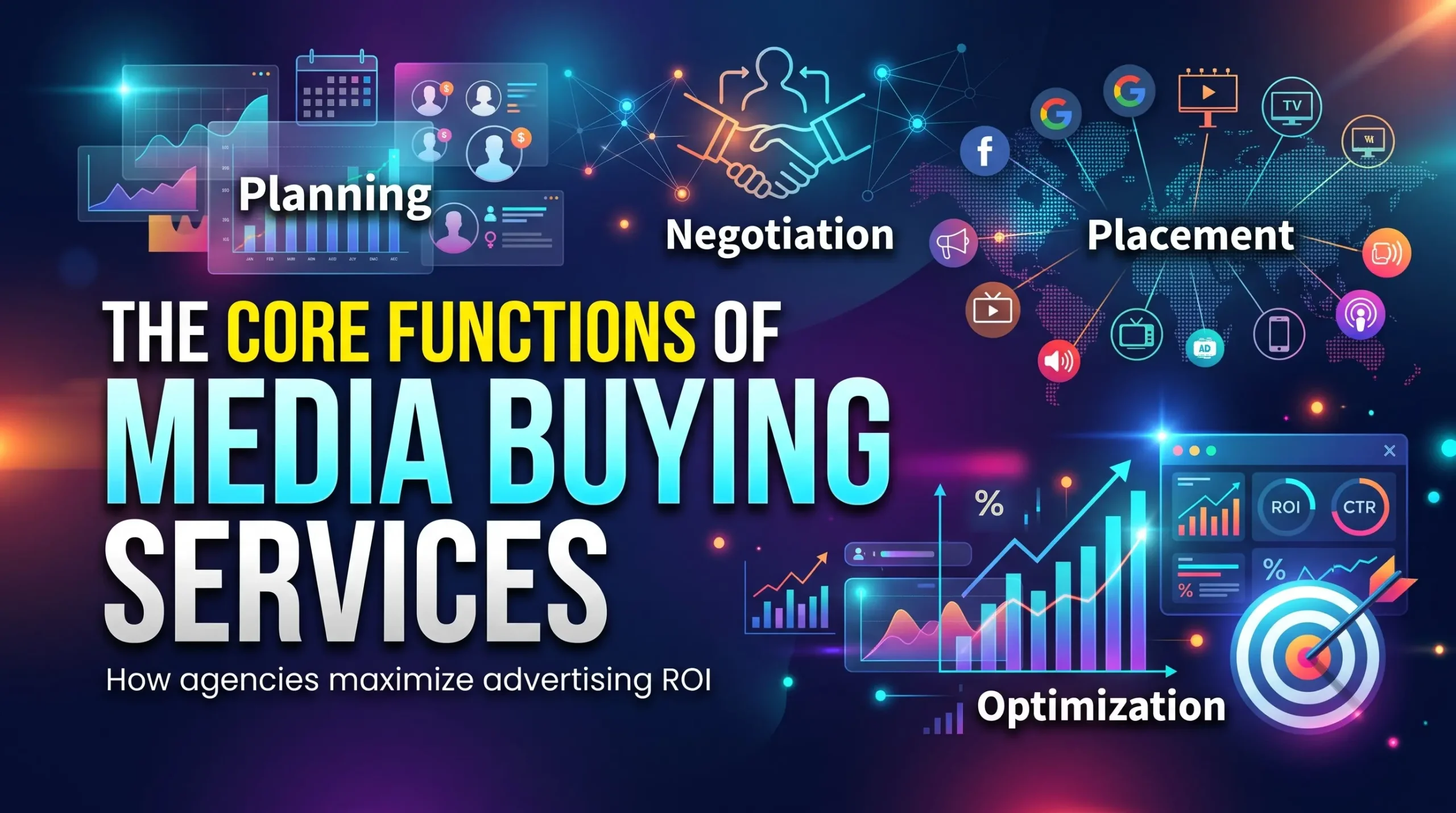
The Core Functions of Media Buying Services
Strategic Planning and Research
Media buying starts with in-depth market analysis and strategic planning. Professional buyers meet with you to discuss target audience, competitive set, and industry trends to develop strategy-driven advertising plans. During this phase, you figure out the best channels, timing, and budget split between online channels.
Audience Targeting and Segmentation
Audience targeting is the lifeblood of successful media buying. Media buying agencies leverage sophisticated analytics technology and, using your own first-party data, identify and segment your target market. They do this by crafting very specific buyer personas and building targeting tactics that ensure they reach people with the right message at the right time.
Budget Management and Optimization
Professional media buyers are skilled at stretching ad budgets to get the most exposure, which results in the optimal return. At the data level, they are constantly adjusting and moving budget from losing channels to those with good ROI. This more aggressive strategy for your budget makes it work harder and achieve better results.
Creative Asset Optimization
Media buyers usually don’t make ad content, but they do optimize the creative assets for various platforms and audiences. This ranges from A/B testing different ad formats to targeting different demographics with messaging and creative that aligns with best practices on the platform.
Types of Media Buying Services
Digital Media Buying
Digital media buying concerns online mediums such as search engines, social media websites, display networks, and streaming services. Digital buyers focus on programmatic advertising, real-time bidding, and data-driven optimization strategies that enable highly targeted and quick campaign adjustments.
Traditional Media Buying
Traditional media buying encompasses older style advertising mediums including television, radio, print (newspapers and magazines), and outdoor advertising. These channels may be old school, but they do have reach and can be effective for some demographics and campaign goals.
Programmatic Media Buying
Programmatic buying involves purchasing of advertising space in real-time using automated technology. This method uses advanced algorithms powered by artificial intelligence and machine learning to scale ad positions, targeting, and bidding strategies across various platforms all at once.
Cross-Channel Media Buying
Media/services cross-channel mix Several advertising platforms can be combined in a media mix, or services, for connected advertising campaigns. This approach leads to a constant communication strategy across all touchpoints and an efficient allocation of budget according to each channel’s performance and overlap.
Advantages in Hiring Professional Media Buying Services
Cost Efficiency and Better Rates
It is common for media buying agencies to gain cheaper advertising costs relative to those of the businesses, as a result of volume purchasing discounts and longstanding relationships with publishers. They can negotiate volume discounts, get hold of premium inventory, and bypass the price pitfalls that newbies typically fall into when they try to buy ads.
Expertise and Industry Knowledge
Professional media buyers keep up with platform changes, industry changes, and best practices on multiple ad platforms. This experience allows them to quickly pivot and deploy tactics that the average business might not know of.
Time Savings and Resource Allocation
It takes a lot of time to manage advertising campaigns properly. When you want to get your brand in front of the maximum number of people on a limited budget, media buying services are the low-cost key to getting you the maximum amount of exposure for your brand without the need to dedicate internal resources for media buying.
Advanced Analytics and Reporting
Media buying services deliver more than basic platform views: They show how users are behaving. They provide information about customer behavior, campaign attribution, and cross-channel performance that’s used to inform wider business decisions.
Media Buying Services – How to Choose the Right One
Evaluate Their Track Record
Find a Media Buying Service that has Successful Experience in Your Industry/Off a Similar Business Model. Ask for case studies, client testimonials, and examples of campaigns that they have managed themselves. Consider performance metrics, as well as the kinds of challenges they’ve already had to overcome.
Assess Their Technology and Tools
Today’s media buying incorporates technology platforms and analytics subsets. Check that your potential partner is using contemporary industry software and can source data in order to manage campaigns thoroughly and effectively.
Understand Their Fee Structure
Media buying agencies bill either as a percentage of ad spend, a monthly fixed fee, or based on performance. Know the line items in their fees and any additional charges for certain services or platforms.
Communication and Reporting Standards
Set clear expectations on how often you would like to have communication, in what format you want reporting, and what key performance indicators. Top of the line media buying company offers you regular performance updates, provides transparent reporting, and is easily accessible to you for discussing both mid-way and final campaign performance, along with any adjustments if required.
Media Buying – What Are the Pain-Points, Issues, and Solutions?
Attribution and Measurement Issues
One of the hardest parts of media buying is properly attributing conversions and tracking cross-channel performance. Professional services mitigate this by tracking so systems are in order, using attribution modeling, and by delivering a 360-degree view of performance as opposed to siloed channel metrics.
Ad Fraud and Quality Concerns
Digital advertising continues to have major issues with ad fraud, brand safety, and viewability. Good media buyers use trusted publisher networks, fraud protection tools, and rigorous quality control standards to safeguard your brand and ad budget.
Platform Changes and Updates
Advertising platforms change their algorithms, policies, and features all the time. Forward-thinking media buying providers are always a step ahead of these fluctuations, so your media buying campaigns aren’t left in the dust when your traffic source changes up its game.
Starting with Media Buying Services
Define Your Objectives and Budget
Before hiring media buying services, decide on your advertising goals, target audience, and the amount of money you have at your disposal. When you have clear goals and more realistic budget expectations, you’ll be better positioned to locate the right service provider and establish appropriate performance benchmarks.
Prepare Your Assets and Information
Prepare all of your compelling marketing materials, brand book, and historical performance data before even approaching any potential media buying partners. This is knowledge that will allow them to make more accurate proposals and faster go-live times.
Start with a Trial Period
Try starting with a less long-term commitment, such as a new hire or testing the service quality before investing in long-term contracts. Quick Sampling. Since View works on an hourly basis, you can try them out and see how they perform and work with relatively little risk.
Media Buying Strategies for Small Businesses
 Small businesses can benefit significantly from well-planned media buying strategies that focus on reaching relevant audiences without overspending. The first step is identifying the platforms where potential customers spend the most time. Instead of spreading advertising budgets across multiple channels, businesses should prioritize platforms that offer the strongest opportunities for engagement and conversions.
Testing different audience segments, ad placements, and campaign formats helps identify what delivers the best results. Small businesses should also establish clear spending limits and monitor campaign performance regularly. By analyzing cost per click, conversion rates, and customer acquisition costs, they can make informed adjustments. A focused media buying strategy helps smaller companies compete effectively, increase brand awareness, and generate valuable leads while maintaining better control over advertising expenses.
The Future of Media Buying Services
The future of media buying services will be shaped by artificial intelligence, automation, predictive analytics, and increasingly sophisticated audience targeting technologies. AI-powered tools are helping advertisers analyze large datasets, identify audience patterns, and optimize bidding strategies more efficiently. Programmatic advertising is also making it easier to purchase ad placements across multiple platforms through automated systems.
Meanwhile, privacy regulations and changing data policies are encouraging businesses to adopt responsible targeting practices and strengthen their first-party data strategies. Video advertising, connected TV, and personalized content are creating additional opportunities for brands to engage potential customers. Businesses that embrace these developments can improve campaign efficiency, make smarter advertising decisions, and build more sustainable media buying strategies in an evolving digital marketplace.
Maximizing Your Media Buying Investment
 Professional media buying services give businesses the expertise, resources, and industry connections needed to succeed in today’s competitive advertising landscape. With the right media buying partner, you can improve campaign performance, optimize advertising budgets, reach the right audiences, and gain valuable insights to support smarter marketing decisions.
Choosing the right partner is essential for achieving sustainable advertising results. Look for a provider with relevant industry experience, transparent communication, and a proven approach to campaign management. SanMo AE helps businesses strengthen their digital marketing strategies through professional solutions designed to improve visibility, maximize advertising performance, and support long-term growth.
Frequently Asked Questions About Media Buying Services
1. What Are Media Buying Services?
Media buying services involve strategically planning, negotiating, and purchasing advertising space across digital and traditional channels. These services help businesses reach target audiences, manage advertising budgets, and improve campaign performance.
2. How Do Media Buying Services Work?
Media buying services begin with audience research, campaign planning, and channel selection. Media buyers then purchase suitable ad placements, manage campaigns, optimize budgets, and track performance to achieve advertising objectives.
3. What Is the Difference Between Media Buying and Media Planning?
Media planning focuses on identifying the right advertising channels, audiences, budgets, and campaign schedules. Media buying involves purchasing advertising placements and managing negotiations to secure suitable opportunities.
4. What Are the Different Types of Media Buying?
The main types include digital media buying, traditional media buying, programmatic media buying, and cross-channel media buying. Each approach helps businesses reach audiences through different advertising platforms and communication channels.
5. Why Should Businesses Hire Professional Media Buying Services?
Professional media buying services provide industry expertise, advanced advertising tools, budget optimization, and campaign management. They help businesses reduce wasted advertising spend and improve their chances of achieving measurable marketing results.
6. How Much Do Media Buying Services Cost?
The cost depends on campaign complexity, advertising budget, selected platforms, and service requirements. Agencies may charge a fixed monthly fee, a percentage of advertising spend, or performance-based fees.
7. Which Platforms Do Media Buyers Use?
Media buyers commonly work with Google Ads, Facebook, Instagram, LinkedIn, YouTube, and programmatic advertising networks. Platform selection depends on business objectives, target audience, industry, and available budget.
8. How Do Media Buyers Measure Campaign Performance?
Media buyers track key performance indicators such as impressions, reach, click-through rate, cost per click, conversions, and return on ad spend (ROAS). These metrics help evaluate campaign effectiveness and identify optimization opportunities.
9. How Can Businesses Avoid Common Media Buying Challenges?
Businesses can reduce media buying challenges through accurate tracking, audience research, fraud prevention, regular campaign monitoring, and transparent reporting. Working with experienced professionals also helps businesses adapt to advertising platform changes.
10. How Can SanMo AE Help with Digital Advertising?
SanMo AE helps businesses strengthen their digital marketing strategies through professional marketing solutions. Businesses can explore its services to improve online visibility, reach relevant audiences, optimize marketing activities, and support sustainable business growth.